
Sustainable Model
The Phil Park and Premium Garage House developed by Phil Company contribute to creating a better society and world by addressing local challenges according to the following model.
1. Identifying Challenges
Leveraging our unique marketing expertise, we uncover the role, potential, and latent possibilities of the land, thereby revealing the ideal future vision and identifying the challenges that need to be addressed.
2. Planning and designing
For parking and its aerial utilization/span>, we plan and design land use methods that are optimal while considering the future."
3. Construction
We create spaces that meet the needs of the times, society, and the community while considering landscape and environmental aspects, thereby generating vibrancy and the comforting glow of the city.
4. Tenant attraction
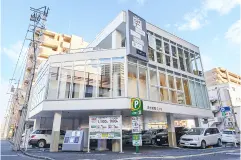
Along with attracting tenants , we will create an environment where small-scale tenants can continue to be active while providing intangible support such as loan plans and start-up support for tenants
5. Operation
You can accelerate the return on investment and choose the next method of use (continuing operation or dismantling) as the city changes . During demolition, we take thorough measures to reduce environmental impact.

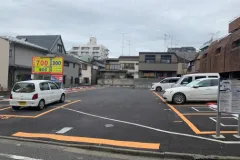
Before

Sustainable manufacturing that continues to please land owners,
tenants, the community, and people
=
future-oriented manufacturing
After
1. Finding issues
We clarify the ideal future image and the issues that need to be solved for the utilization of vacant land and houses in the suburbs .
2. Planning and design
We plan and propose rental garage houses as a variety of housing and lifestyle options that are not limited by location .
3. Architecture
Solar power generation equipment will be installed on the roof of the Premium Garage House, contributing to the reduction of environmental impact through the spread of renewable energy.
4. Recruiting residents
Through tenant recruitment, we will attract needed and missing functions to the town, such as bringing residents into the area and creating vibrancy .
5. Operation
You can accelerate the return on investment and choose the next method of use (continuing operation or dismantling) as the city changes . During demolition, we take thorough measures to reduce environmental impact.
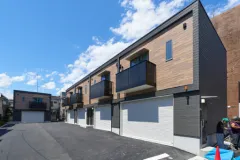
Before
Sustainable manufacturing
that continues to please land owners, communities, and people
=
future-oriented manufacturing
After
Five priority themes
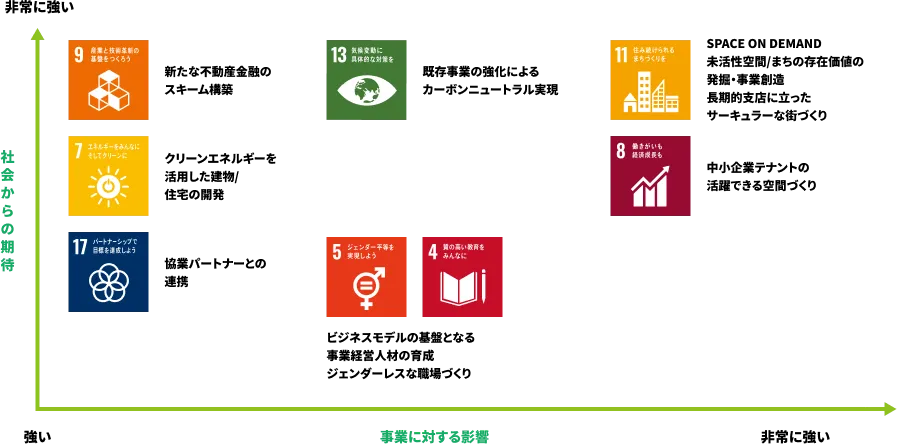
We have identified priority issues (materiality) from the perspective of sustainability policy and realization of SDGs, and are focusing on five initiatives. We will continue to review the identified material issues as appropriate and promote effective initiatives.
- Theme 1Promoting circular urban development based on SPACE ON DEMAND
- Theme 2Creating an environment where small and medium-sized tenants can thrive, including design, management support, and design that takes into account flow lines.
- Theme 3Initiatives to improve energy efficiency in buildings, reduce GHG emissions, and promote energy-related investments
- Theme 4Developing human resources for business management and creating a diverse workplace
- Theme 5Compliance, response to financial and real estate market fluctuations
Step.1Extracting and examining social issues
Identifying issues in the environment, society, economy, etc. based on a wide range of social issues and trends related to ESG
Step.2Assessing importance
Dear stakeholders, evaluate the importance of social issues from the perspective of their impact on our company's management, etc., and consider priorities.
Step.3Identification of importance (materiality)
Consider and identify important issues based on two axes: importance to the company and importance to stakeholders (society's expectations)
Step.4Review and approval by the Sustainability Committee and management level
Review and approval at the management level after consideration by our Sustainability Committee
We organized the identified priority issues into a materiality matrix based on two axes: their impact on our business and the expectations of society (stakeholders).
KPIs (non-financial goals) for 2030
- KPI 1
- Circular town development based on SPACE ON DEMAND
- KPI 2
- Zero greenhouse gas emissions (Scope 1.2)
*Scope3 reduced by 30% - KPI 3
- Developing human resources for business management and creating a diverse workplace
As we look toward 2030, we will accelerate our sustainability efforts based on the philosophy of "SPACE ON DEMAND" (creating spaces that meet the demands of today's world), which we have cherished since our founding.
To this end, the Sustainability Committee sets KPIs (non-financial targets) for each materiality (identified priority issues) and manages progress by reviewing performance. The KPIs related to identified priority issues and initiatives, including climate change, are as follows.
| KPI (non-financial goals) | Goal details | Target range | Related SDGs |
|---|---|---|---|
| Circular town development based on SPACE ON DEMAND | A total of 1,000 buildings at Phil Park and PGH | Entire Phil Company Group | |
| Reducing greenhouse gas emissions ※1 | Total of Scope 1 and 2 ※2 2025 ▲50% reduction 2030 Virtually zero |
Scope 1.2 total: Buildings for which the Phil Company Group has energy management authority | |
| Scope 3 total ※3 2030 ▲30% reduction 2050 Virtually zero |
Scope 3: Indirect emissions other than Scope 1.2 related to the business activities of the Phil Company Group | ||
| Compatibility with ZEB/ZEH | 100% ZEB/ZEH compatible for new buildings after 2030 | Entire Phil Company Group | |
| PGH using domestic wood | More than 50% of newly built PGHs after 2030 will use domestic wood. | Entire Phil Company Group | |
| Number of climate change monitoring by the Sustainability Committee | At least once each year | Phil Company, Inc. | |
| Creating an environment where small and medium-sized business tenants can thrive | Occupancy rate of individuals and small and medium-sized tenants is 80% or more | Phil Company, Inc. | |
| Developing human resources for business management and creating a diverse workplace | Ratio of women in management positions is 30% or more | Entire Phil Company Group |


TCFD (Task Force on Climate-related Financial Disclosures)

Recognizing the importance of climate-related financial information disclosure, Phil Company endorses the TCFD recommendations (*) in 2022, considers and responds to the disclosure items recommended by the TCFD, and discloses information in accordance with the recommendations. We are doing
We will communicate our efforts to realize a sustainable society in an easy-to-understand manner to our stakeholders, and work to further enhance information disclosure.
- ※TCFD (Task Force on Climate-related Financial Disclosures) was established by the Financial Stability Board, an international organization that includes the central banks and financial regulators of major countries. The task force has recommended a framework for disclosing climate-related information to investors.